

15 September 2026 | Seoul, South Korea
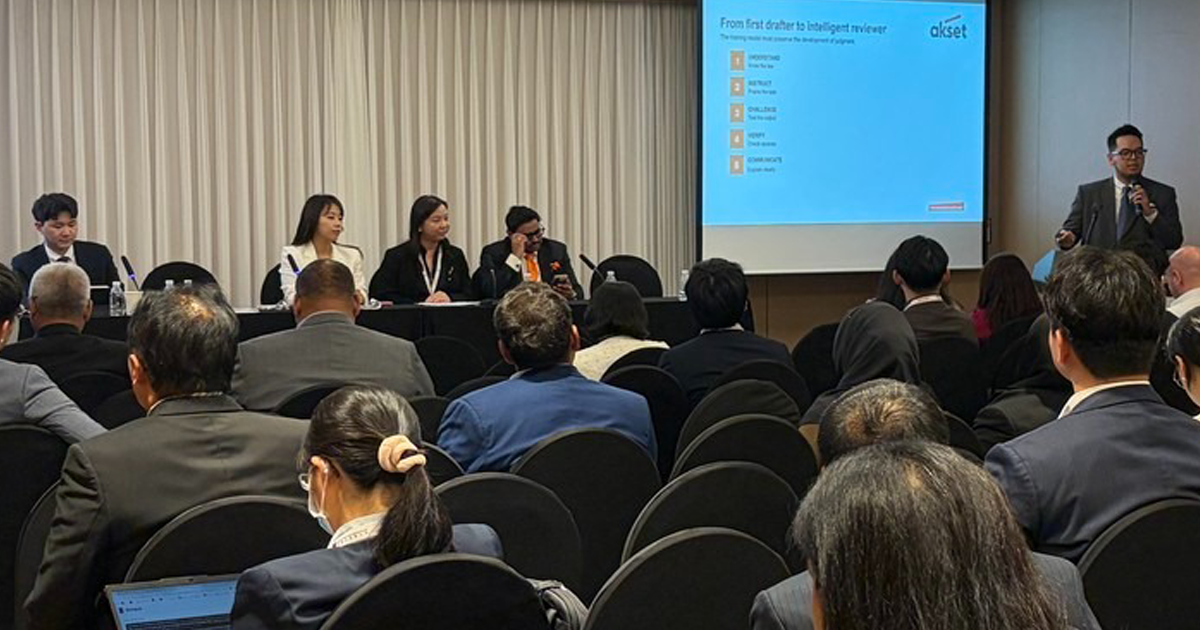
GJC Law’s Chong Xin Yi (Liesel) was featured in Korean Bar News following her participation as a speaker at the 39th LAWASIA Conference in Seoul, where lawyers from across the Asia-Pacific gathered to discuss the future of legal practice amid the growing use of artificial intelligence and wider geopolitical change.
Speaking during a session on “Emerging Lawyers in the Age of AI and Geopolitical Change,” Liesel discussed what the increasing use of AI could mean for the development of the next generation of lawyers. She observed that, much like smartphones have become part of everyday life and work, AI is increasingly becoming part of how lawyers practise.
Her discussion focused on three questions: what the profession may lose as AI takes over work traditionally performed by junior lawyers; how firms can preserve the learning process while benefiting from AI-generated efficiencies; and how the responsibilities of senior lawyers may need to evolve.
Liesel argued that firms should not preserve time-consuming traditional tasks simply for the sake of training. Instead, the time saved through AI can be used more deliberately to develop lawyers. Where AI produces a draft quickly, for example, senior lawyers can spend that time explaining why it was structured in a particular way, why certain issues matter, and what may be missing from the analysis.
She also highlighted the growing importance of AI literacy. Lawyers need to be able to compare AI-generated answers, identify assumptions or omissions, provide the right context when using AI tools, and understand their limitations and potential biases. As lawyers become more experienced, the ability to evaluate and verify AI-generated work will become increasingly important.
At the same time, Liesel cautioned against abandoning traditional mentorship altogether. The process of a senior lawyer explaining why a particular judgement was made and discussing how that conclusion was reached remains an important part of developing professional judgement.
The wider LAWASIA discussions examined how AI is changing legal practice beyond training, including questions surrounding client confidentiality, client consent, professional responsibility and traditional hourly billing models. Speakers considered how greater automation may change the work lawyers perform while reinforcing the importance of human judgement, ethical responsibility and accountability to clients.
Liesel’s contribution reflected a central theme of the conference: AI may change how legal work is carried out, but developing judgement, evaluating legal issues and taking responsibility for legal advice remain fundamentally human responsibilities.