
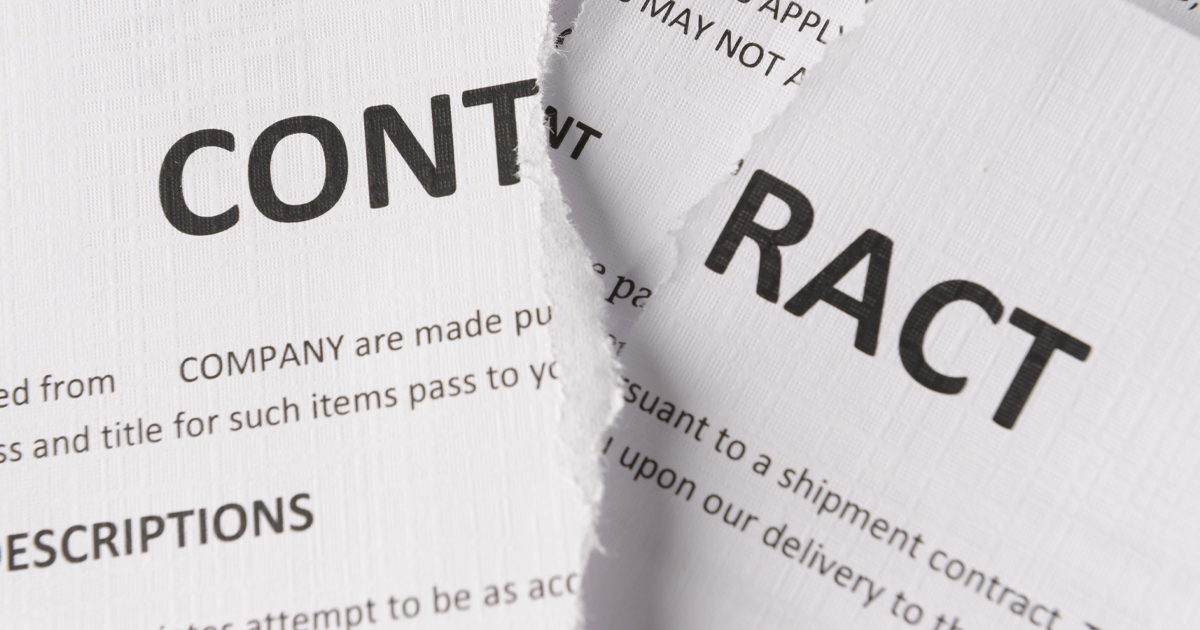
A breach of contract occurs when a party to a legally binding agreement fails to perform their contractual obligations without a lawful excuse. This can take a variety of forms, including non-performance, delayed performance, or conduct showing an unwillingness or inability to perform contractual duties.
A breach may be actual (failing, neglecting and/or refusing to perform at the time performance is due) or anticipatory (indication of non-performance before the time for performance has arrived).
Identifying a Breach
To establish a breach, it must be shown that:
- A valid contract existed. If a contract is void (for example, due to a common mistake or illegality), it has no legal effect, and therefore no actionable breach can occur.
- The contract contained specific obligations owed by one party to the other.
- The party alleged to be in breach has, without lawful excuse, failed, neglected and/or refused to perform their obligations, performed them defectively, or incapacitated themselves from performing such obligations.
Not every breach will justify termination of the contract – a breach, if proven, always gives rise to a liability to pay damages, but the right to end the contract is more restricted.
Whether termination is an available option depends on the type of the contractual term breached and the seriousness of the breach.
The law distinguishes between different types of contractual terms:
- Conditions: Any breach of a “condition” (an important term) is generally treated as serious enough to allow termination.
- Warranties: A breach of a “warranty” (a less important term) usually only allows for a claim in damages and does not justify termination.
- Innominate terms: For these terms, the right to terminate is not automatic; it depends on the actual consequences or gravity of the breach in that specific instance. There is a right to terminate the contract if the breach deprives the innocent party substantially the whole benefit of the contract.
Types of Breach
In practice, breaches are often categorised by their impact on the contract:- Minor breach: A failure to comply with a minor or non-essential term of the contract, while otherwise performing the primary obligations.
- Material breach: A serious breach that goes towards the root of the contract, depriving the innocent party of substantially the whole benefit they were intended to receive under the contract.
- Anticipatory breach: A clear indication that a party will not perform their future obligations before the time for performance has arrived, allowing the innocent party to elect remedies early.
Remedies for Breach
Under Singapore law, several remedies are available to address contractual breaches.
Damages
Monetary compensation is the principal remedy for breach of contract. The innocent party is entitled to damages for losses directly caused by the breach. However, the law imposes a duty to mitigate, meaning the innocent party must take reasonable steps to minimise their losses, and failure to do so limits the damages they can recover.
Termination
In cases of serious breach, the innocent party may elect to terminate the contract, discharging both parties from future obligations. However, accrued rights or obligations up to the date of termination remain enforceable.
Specific Performance
Where monetary compensation is inadequate, such as in contracts involving unique subject matter, the courts may order specific performance, compelling the defaulting party to fulfil a specific contractual obligation. This is a discretionary remedy, granted only in circumstances where it is just and equitable to do so.
Injunctions
Courts also possess the discretion to grant a prohibitory injunction to restrain a party from continuing a contractual breach or to compel them to refrain from taking certain further harmful actions.
Practical Considerations in Singapore
Mitigation
Following a breach of contract, the innocent party is required to take reasonable steps to mitigate the losses arising from the breach. This means avoiding unnecessary expenditure or losses where reasonable alternatives are available. A failure to mitigate does not prevent a claim from being brought, but it may result in a reduction of the damages recoverable.
Losses attributable to unreasonable action or inaction will not be recoverable, and where the innocent party successfully avoids any loss, no damages may be claimed. However, the innocent party may recover reasonable expenses or additional losses incurred in the course of mitigating the original loss, even if those costs ultimately exceed the initial loss.
Whether a party has acted reasonably is evaluated based on the facts. The courts will consider what a reasonable person would have done in the specific commercial context.
Limitation Period
In general, breach of contract claims must be commenced within six years from the date the breach occurred, in accordance with the Limitation Act 1959. Once this period has expired, the claim may be time-barred, meaning the courts will generally refuse to enforce the agreement.
Identifying when the breach arose can be complex, particularly where breaches occur over a period of time or involve ongoing obligations. This is why early legal advice is often important to preserve rights.
Alternative Dispute Resolution
Contractual disputes in Singapore are frequently resolved through negotiation, mediation, or arbitration, particularly where parties wish to preserve commercial relationships and/or manage costs.
Many contracts also contain alternative dispute resolution clauses specifying the process to be followed before court proceedings may be commenced.
Where resolution cannot be achieved through alternative means, litigation remains available through the State Courts or High Court, depending on the value and complexity of the claim.
Whether you are pursuing or responding to civil claims for breach of contract, informed legal guidance can make a meaningful difference to the outcome.
Why Choose GJC Law for Breach of Contract Matters
At Gloria James-Civetta & Co (GJC Law), our Civil Litigation Lawyers approach breach of contract disputes with a clear focus on clients’ legal rights, commercial realities, and practical outcomes.
Our firm represents both individuals and businesses, including parties commencing contractual claims as well as those responding to or defending such claims. We regularly advise on disputes involving unpaid sums, failed or delayed performance, terminated agreements, and complex commercial arrangements.
We understand that contractual disputes are rarely confined to legal issues alone. They often involve ongoing business relationships, financial exposure, and reputational considerations. Our litigation lawyers take the time to analyse contractual terms carefully, assess the strength of the evidence, and provide realistic advice on risks, costs, and available remedies at an early stage.
Where appropriate, we seek to resolve matters efficiently through negotiation or alternative dispute resolution. When litigation is necessary, we prepare cases thoroughly and represent our clients with care and diligence throughout the court process.
GJC Law is committed to providing:
- Clear and commercially grounded legal advice
- Careful case assessment and structured strategic planning
- Practical solutions aligned with clients’ objectives
- Professional representation at every stage of the process
If you are considering taking action for breach of contract, or a claim has been brought against you, our team can assist in evaluating your position and advising on the most appropriate course forward.
Contact GJC Law to arrange a consultation and discuss your matter in confidence.